

Oxspring designs and delivers secure, high-performance wireless networks for offices, commercial buildings, warehouses and factories. We start with the environment and the outcome you need, then use professional survey and planning tools to determine the right design.
Whether you are planning a new deployment, refreshing ageing equipment or trying to understand an existing problem, the best first step is usually a wireless survey.
Discuss a wireless survey
Tell us what is changing, what is going wrong and which areas or devices matter most. You do not need a complete technical brief. We will help you identify the smallest useful survey scope, with no obligation to proceed. Email solutions@oxspring.com with the subject “Wireless survey”.
Does this sound familiar?
Wireless problems are not always obvious, and signal bars rarely tell the whole story. You may need help if:
- people experience dead spots, slow connections or intermittent drop-outs;
- voice, video or business applications perform badly despite apparently good signal;
- laptops, scanners or other mobile devices disconnect while moving;
- performance deteriorates when meeting rooms fill, shifts overlap or activity increases;
- your access points are five to seven years old or approaching end of support;
- you are planning a building move, refurbishment or workplace redesign;
- Wi‑Fi is becoming the main connection for hot desking or hybrid working;
- guest, contractor or BYOD access has become difficult to control;
- a new installation needs to be checked against its design and acceptance criteria.
Adding more access points is not necessarily the answer. Poor placement, excessive overlap, interference, unsuitable channel or power settings, client behaviour and weaknesses in the underlying LAN can all produce similar symptoms. Measurement allows us to separate the cause from the symptom before you invest in changes.
Why start with a wireless survey?
Every building affects radio signals differently. Walls, ceilings, furniture, racking, machinery, stock and neighbouring networks can all influence coverage and performance. The devices using the network matter too: a modern laptop, a voice handset and a warehouse scanner may behave very differently in the same location.
A professional wireless survey provides evidence for the decision you need to make. Depending on the brief, it can:
- determine suitable access-point positions and antenna choices;
- assess coverage, signal quality, interference and capacity;
- investigate roaming and application problems along real working routes;
- identify whether the wired network or configuration contributes to the issue;
- support cabling and installation decisions before a fit-out is complete;
- compare a finished deployment with agreed design criteria;
- prioritise corrective work and avoid unnecessary equipment purchases.
The output should be more than a collection of colourful heatmaps. We explain what the findings mean, how they affect users or operations, and which actions should be taken first.
Which situation are you facing?
Planning a new building or wireless network
Early wireless input can prevent expensive changes later. Using floor plans, building information, expected devices and application requirements, we can model likely coverage and capacity before the environment is complete. This informs access-point placement, antenna selection, cabling routes and switching requirements.
A predictive design represents the intended environment, so important installations should be validated once the building is finished and operating conditions are representative.
Refreshing ageing Wi‑Fi
Replacing old access points one for one may preserve the weaknesses of the existing design. New frequencies, different device capabilities, changing occupancy and modern application demands can alter what the network needs to provide.
We assess the current service and future requirements before recommending how much of the design, cabling or supporting LAN should change. This gives you a refresh plan based on business need rather than equipment age alone.
Planning Wi‑Fi during an office refurbishment
Oxspring works with your IT team, facilities team, architect and fit-out contractor to turn the proposed layout, expected occupancy, devices and applications into a practical wireless brief. We coordinate access-point positions, mounting, cabling, switching and Power over Ethernet requirements, reducing the risk of late changes or unsuitable reuse of existing positions.
When should the survey happen during refurbishment?
Start wireless planning while the layout can still change. Predictive design informs access-point positions and infrastructure requirements; site checks confirm assumptions and installation constraints before ceilings close or cable routes become inaccessible. Validate the installed network once the finished layout and operating conditions are representative. An early model does not prove the completed service.
Agree current plans, device requirements, acceptance criteria and responsibility for unresolved decisions with the project team. Review changes to layouts or materials before installation continues, and allow time for corrective work and retesting before final acceptance.
For survey types, scoping information and deliverables, read the wireless survey FAQ.
Upgrading to Wi‑Fi 6E or Wi‑Fi 7
Oxspring helps you determine whether Wi‑Fi 6E or Wi‑Fi 7 will deliver a meaningful improvement before you commit to new hardware. We assess your users, applications and existing network, then recommend what can remain, what needs to change and how the completed installation should be validated.
Do we need a survey for Wi‑Fi 7?
A desk-based review can assess readiness and identify infrastructure dependencies, but cannot by itself prove coverage or application performance. If you plan to use 6 GHz, change access-point positions or depend on wireless for critical services, use survey-led design and validate the completed installation. Do not assume existing positions will provide the coverage you need.
Before selecting equipment, confirm client and application compatibility, cabling, switch-port speeds, uplink capacity and Power over Ethernet budgets. Check management, licensing, security and applicable 6 GHz operating rules against the proposed design. Model or measure coverage using current building information, and agree acceptance tests with representative devices, including roaming where it matters.
See our Enterprise networks guidance for the wired infrastructure supporting Wi‑Fi.
Fixing an existing problem
A troubleshooting survey starts with a defined symptom: dropped calls, slow scans, unreliable meeting-room performance, intermittent dead spots or failures at busy times. We shape the work around the affected devices, locations, routes and operating conditions.
This helps distinguish weak coverage from interference, airtime contention, roaming behaviour, configuration, client issues or an upstream network problem. The result is a prioritised remediation plan rather than trial-and-error changes.
Supporting mobile and operational devices
Scanners, voice devices, tablets, mobile workstations and robots depend on more than basic coverage. They may require predictable roaming, low latency and consistent application performance while moving through the site.
We test the actual device types along the routes where people and equipment work. This is particularly important in warehouses and factories, where stock, racking, machinery and changing layouts make the radio environment less stable than a typical office.
Learn about warehouse and factory Wi‑Fi challenges
Validating a completed installation
A post-installation survey measures the live service against agreed criteria. These may include primary and secondary coverage, signal-to-noise ratio, channel use, roaming or application performance.
The report distinguishes compliant findings, exceptions and areas that could not be assessed. This creates an evidence-based handover position and directs any corrective work before final acceptance.
Wireless services built around the decision you need to make
Predictive wireless design
We model the proposed environment using scaled plans, building materials, room or racking layouts, expected devices and service requirements. This supports early design and budget decisions before access points are installed.
On-site design survey
An engineer assesses the real environment, confirms available plans and gathers measurements. This can expose attenuation, interference, access restrictions and practical installation constraints that drawings cannot show.
Wireless troubleshooting
We investigate a defined performance problem using relevant measurements, spectrum analysis, configuration review and device testing. The scope focuses on finding the cause and identifying practical corrective action.
Post-installation validation
We test the completed network against the agreed design and success criteria. Where mobility matters, validation can include repeatable route tests using representative devices.
Wireless design and implementation
Where required, we can take the work from survey and design through installation, configuration, commissioning and handover. We consider the wireless service alongside switching, Power over Ethernet, cabling, segmentation, resilience and ongoing management.
Our survey-led approach
- Understand the requirement. We discuss the building, current network, devices, applications, business impact and timescale.
- Agree the right scope. We recommend the smallest survey or design activity capable of answering the question.
- Measure or model. Our wireless engineers use professional survey and planning tools to gather relevant evidence.
- Design or diagnose. We assess the findings against the operational need, not a generic signal target.
- Implement where required. We can design, install and configure the wireless and supporting network infrastructure.
- Validate and explain. We document the outcome, prioritise recommendations and review the important findings with your team.
Oxspring has worked with Cisco networking technologies for over 25 years. Our scale allows clients to work closely with experienced engineers and decision-makers, so designs can respond quickly to real site constraints without unnecessary process or delay.
Experience across demanding environments
Wireless-first workplace in central London
A multi-floor London site needed dependable coverage for flexible working, retail and event spaces, an outdoor terrace and a steady flow of visitors. Following an initial survey and design, Oxspring delivered 61 Cisco access points, resilient wireless control, staff and guest access, and ongoing performance monitoring.
View the workplace Wi‑Fi project
500,000 sq ft distribution warehouse
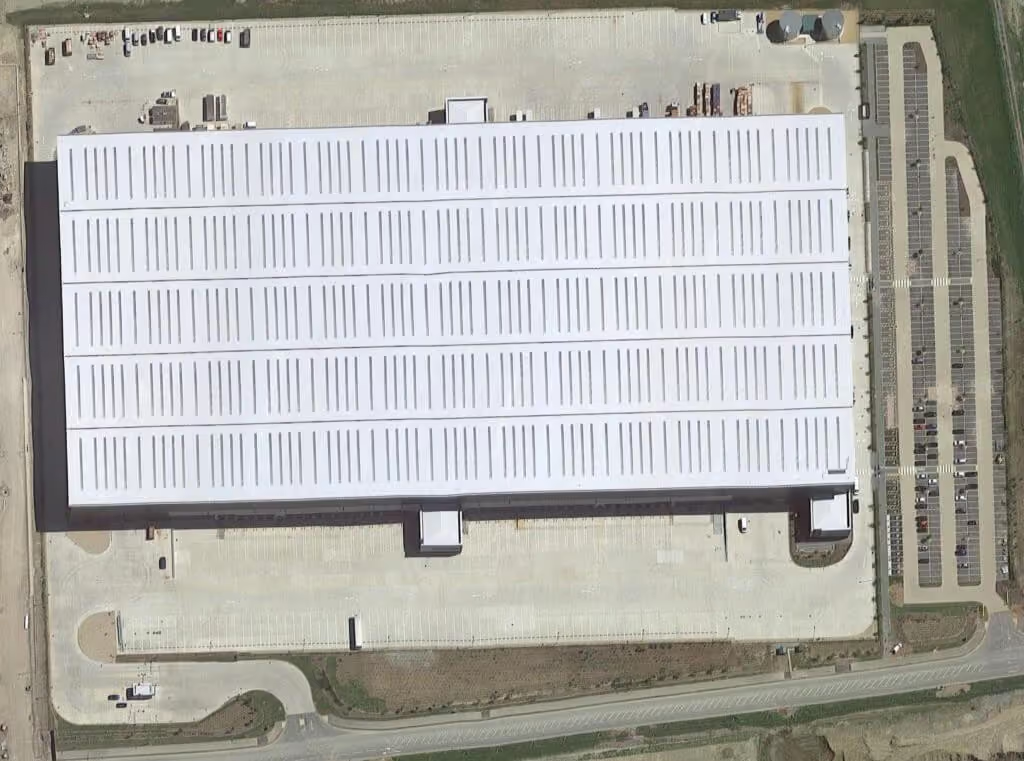
A new distribution centre had to become operational on a fixed deadline while the physical layout and other construction work continued to change. Oxspring designed and delivered the resilient LAN and wireless infrastructure in parallel with other trades, then validated the service once the warehouse environment became representative.
View the distribution warehouse project
Low-latency Wi‑Fi for moving robots
Around 80 automated picking robots needed continuous wireless communication while moving through a distribution centre. The design had to control interference, support seamless roaming and account for radios installed close to floor level within the robots’ protective enclosures. Directional antennas and carefully planned access-point positions helped meet the demanding operational brief.
View the low-latency wireless project
Business Wi‑Fi for different environments
Offices and hybrid workplaces
Support flexible working, meeting-room collaboration, voice and video, guest access and high device density without treating Wi‑Fi as an afterthought. We design the wireless service together with the LAN and access policies that underpin it.
Retail, hospitality and public-facing spaces
Provide dependable staff connectivity and a controlled visitor experience while separating internal, guest and contractor traffic. Designs can account for busy periods, public areas and the operational systems that share the network.
Warehouses and distribution centres
Reliable scanning, voice, warehouse-management systems and automation depend on predictable connectivity along real movement routes. Designs must account for racking, stock, mounting height, antenna patterns, client behaviour and interference.
Explore Connected Warehouse to see how wireless fits alongside the LAN, WMS, voice, automation and security across the wider warehouse environment.
Related guidance: How to fix warehouse Wi‑Fi roaming and handoff issues
Factories and production areas
Production Wi‑Fi may support mobile terminals, data collection, maintenance, quality systems and automation. We consider environmental conditions, operational consequences, device requirements and the relationship between wireless, IT and operational networks.
Explore Connected Factory to see how wireless supports production connectivity, IT/OT integration, operational visibility and automation.
Related guidance: Overcoming Wi‑Fi challenges in warehouses, factories and other industrial settings
Frequently asked questions
What is a wireless survey?
A wireless survey is a structured assessment of how Wi‑Fi should or does perform in a defined environment. Depending on the objective, it may use predictive modelling, on-site measurements, spectrum analysis, configuration review and device testing to support design, diagnosis or validation.
Which type of wireless survey do I need?
That depends on the decision you need to make. Predictive surveys support early design; on-site surveys assess the real environment; troubleshooting surveys investigate a defined problem; and post-installation surveys validate a completed network. Some projects use more than one stage.
Can you design Wi‑Fi from floor plans?
Yes. Predictive modelling can inform access-point positions, antenna choices and cabling before a building or fit-out is complete. The model should use realistic materials, layouts, device requirements and performance criteria, then be validated in the finished environment where the service is important.
Can too many access points make Wi‑Fi worse?
Yes. Too few access points can leave gaps, while too many or badly configured units can increase contention and produce excessive overlap. Placement, channels, power, antennas and client behaviour need to be considered as one design.
Do we need a survey before upgrading to Wi‑Fi 6E or Wi‑Fi 7?
A desk-based review can assess readiness, but a survey-led design is appropriate where you intend to use 6 GHz, change access-point positions or support critical services. Existing positions should not be assumed suitable; validate the completed installation against agreed criteria.
Why does Wi‑Fi fail even when the signal looks strong?
Signal strength is only one measure. Interference, low signal-to-noise ratio, retransmissions, airtime congestion, roaming behaviour, device limitations and problems elsewhere in the network can all affect performance while the device still displays several signal bars.
Can you survey a live warehouse or factory?
Yes, subject to access, safety and operational constraints. Representative conditions are often valuable because stock, machinery and activity can affect performance. We agree inductions, restricted areas, working times and any active testing before the visit.
What will the survey report contain?
The deliverables depend on the agreed scope, but normally include the purpose and areas assessed, relevant coverage and signal-quality evidence, findings ranked by significance, practical recommendations, limitations and a review conversation. Validation reports can also provide an acceptance position against agreed criteria.
Discuss your wireless survey
You do not need to know which survey type to request or prepare a complete technical specification. Tell us:
- what the site is used for and its approximate size;
- whether the network is planned, newly installed or already operational;
- what is changing or going wrong;
- which devices, applications, areas or movement routes matter most;
- whether suitable floor plans are available;
- your required timescale or project milestone.
We will arrange an initial conversation, with no cost or obligation, and recommend the smallest useful scope.
Email solutions@oxspring.com with the subject “Wireless survey”.