.svg)
Who is Connected Warehouse for?
Connected Warehouse is for operations and IT leaders responsible for warehouses, distribution centres, fulfilment operations and logistics estates. It is particularly relevant when:
- scanners, voice-picking devices or vehicle-mounted terminals disconnect while moving
- Wi‑Fi performance changes as racking fills, stock moves or seasonal demand increases
- WMS, ERP or cloud applications are becoming more important to daily operations
- a new building, chamber, mezzanine, yard or loading area needs dependable connectivity
- automation, AGVs, AMRs, robotics or computer vision are moving beyond a pilot
- a network refresh must improve resilience, security and operational visibility
- several sites need a consistent design and support model without ignoring local differences
What should a warehouse network achieve?
A warehouse network should help people and systems complete work reliably, not simply show that access points and switches are online. A well-designed environment supports:
- Faster, more reliable picking and dispatch, with fewer scanner delays and dropped sessions
- Accurate, timely stock data, so WMS and ERP records reflect what is happening on the floor
- Predictable mobility for scanners, voice devices, tablets, forklift terminals and autonomous equipment
- Operational resilience across wired, wireless, WAN and internet services
- Safer separation between corporate users, operational devices, automation, contractors and guests
- Clearer fault-finding, with evidence that helps IT distinguish coverage, interference, client and application problems
- A foundation for growth, from a new picking zone to a multi-site automation programme
What does “Connected Warehouse” mean?
Connected Warehouse is an architectural approach, not a single product. It brings together the LAN, Wi‑Fi, fibre backbone, WAN, security controls and operational monitoring around the needs of the warehouse.
That distinction matters. Warehouse connectivity is often discussed as a Wi‑Fi problem because wireless faults are visible to users first. In practice, a slow scan or lost session can originate in the RF design, the client device, authentication, switching, routing, WAN performance or the application itself. Treating these layers as one service makes it easier to design for the operation and isolate faults when something changes.
Why is warehouse networking different from office networking?
Warehouses are large, metal-rich and constantly changing. High-bay racking creates long radio corridors. Stock can absorb or reflect signals, while forklifts, doors, machinery and neighbouring systems alter the environment throughout the day. A design that appears adequate in an empty building may behave differently when the racking is full.
Devices also move while doing useful work. A laptop can tolerate a brief pause; a scanner transaction, voice instruction or automated vehicle may not. Strong signal in a static test therefore does not prove that a device will roam cleanly at an aisle end, through a loading-bay door or between operational zones.
The wired network matters just as much. Large floor areas often require outlying cabinets, fibre uplinks and careful PoE planning because copper Ethernet runs are limited to roughly 100 metres. Resilience, physical pathways, environmental conditions and coordination with other trades must be considered early, especially in new builds and phased expansions.
The six foundations of a Connected Warehouse
1) Resilient wired infrastructure
The LAN and fibre backbone provide the foundation for wireless, CCTV, access control, printers, automation and local systems. We design appropriate core, distribution and access layers, PoE capacity and diverse uplinks around the operational importance of each zone. The objective is to contain faults and maintenance rather than allow one failed link or cabinet to interrupt the whole operation.
2) Survey-led warehouse Wi‑Fi
Warehouse Wi‑Fi must be designed for racking, stock, client height and real movement routes. We combine predictive modelling with on-site measurement, spectrum analysis and post-installation validation as the project allows. Aisles, open packing areas, mezzanines, cold stores, yards and loading bays may each need a different antenna, placement or capacity strategy.
More access points do not automatically produce a better result. Excessive overlap and poorly controlled cell sizes can increase interference and encourage devices to remain attached to the wrong access point. We use evidence to decide whether the right action is to add, move, reconfigure or sometimes remove access points.
3) Reliable roaming and device compatibility
The client device usually decides when to roam. Scanners, voice-picking headsets, tablets and vehicle-mounted terminals can behave differently even on the same network. We test the actual device models and firmware along representative walking and vehicle routes, then align RF cell sizes, channel plans and roaming features with what the estate can support.
Success criteria should reflect the application: session continuity, transaction time, latency, retries and roam behaviour, not only signal strength or a speed test.
4) Secure access and segmentation
Warehouse networks commonly serve employees, office users, scanners, building systems, cameras, automation, contractors and guests. These groups should not receive unrestricted access simply because they share the same physical infrastructure.
We design authentication and segmentation around identity, device type and operational need. This can include certificate-based access, network access control, separate security zones, controlled third-party connectivity and isolated guest access. The aim is to reduce risk without introducing unnecessary complexity for the teams operating the site.
5) Connectivity for WMS, automation and robotics
WMS and ERP transactions depend on consistent end-to-end connectivity. Automation raises the requirement further: AGVs, AMRs, robotics, vision systems and edge applications may need tightly controlled latency, dependable roaming and protected traffic paths.
We begin with the application and its failure tolerance. Standard enterprise Wi‑Fi may be appropriate for many devices and zones; specialist wireless or industrial equipment may be justified where mobility, temperature, dust, moisture or availability requirements demand it. This avoids applying the most expensive technology everywhere while still protecting genuinely critical workflows.
6) Visibility and day-two operations
A warehouse changes after handover. Stock profiles shift, racking moves, device fleets evolve and new systems are introduced. Monitoring, documented baselines and controlled change make these changes easier to manage.
We can provide commissioning records, network and RF documentation, configuration guidance, validation evidence and ongoing support. For changing sites, periodic surveys or targeted validation after significant layout changes can identify performance drift before it becomes a recurring operational problem.
How does Oxspring deliver a warehouse network project?
Discover. We map the site, operating processes, device estate, applications, critical routes, peak periods, security requirements and planned changes. This establishes what the network must support and where failure would hurt most.
Survey and assess. Depending on the project stage, we review the existing network, model a planned environment, survey the live site and examine spectrum use, coverage, capacity and roaming behaviour.
Design. We develop the wired, wireless and security design together. That can include switching, fibre, cabinets, Wi‑Fi, antenna selection, segmentation, WAN resilience, management and acceptance criteria.
Install and commission. Our engineers coordinate with site teams and other contractors, work around operational and safety constraints, and document changes through the agreed control process.
Validate. We test the finished service against its intended use. That may include coverage and capacity checks, real-route roaming tests, application reachability, resilience and security-zone isolation.
Support and improve. We hand over usable documentation and can provide monitoring, technical support, lifecycle advice and further validation as the building or operation changes.
Proven in demanding warehouse environments
Oxspring has worked with Cisco networking technologies for over 25 years. We combine that platform experience with practical knowledge of live warehouses, changing builds and deadline-driven openings.
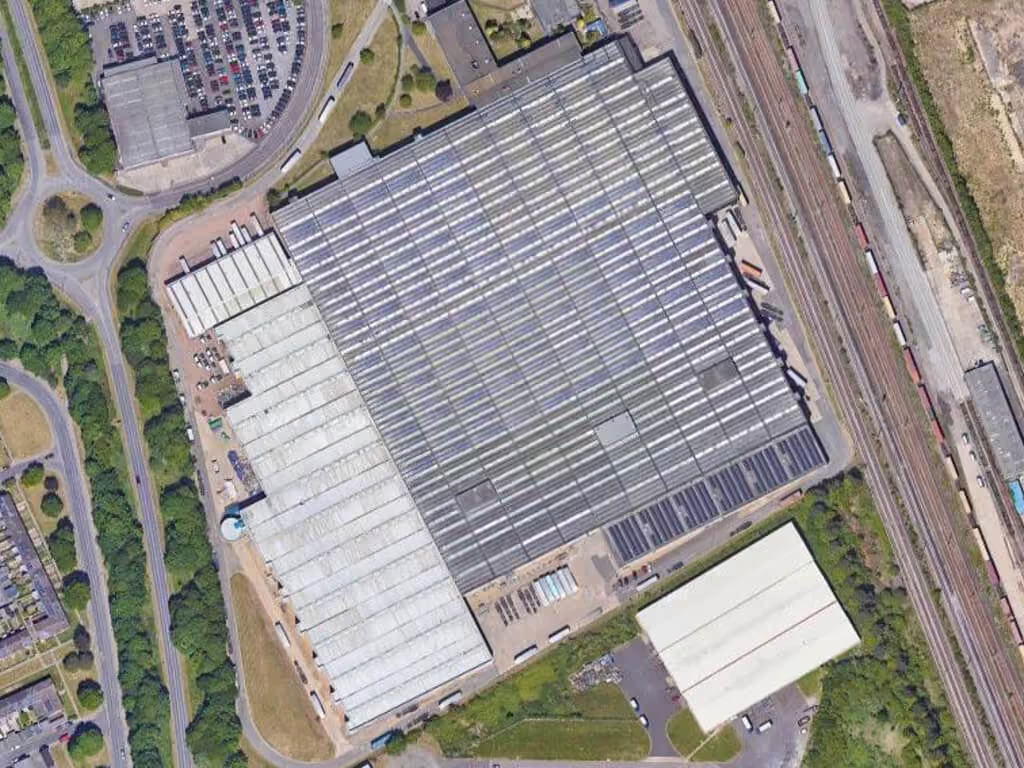
- Improving roaming in a large distribution centre. A relatively new Cisco deployment still suffered disconnections during movement. Our survey identified excessive access-point overlap, unsuitable mounting and antenna orientation, and configuration issues. Targeted remediation improved reliability without defaulting to wholesale replacement. Read the project.
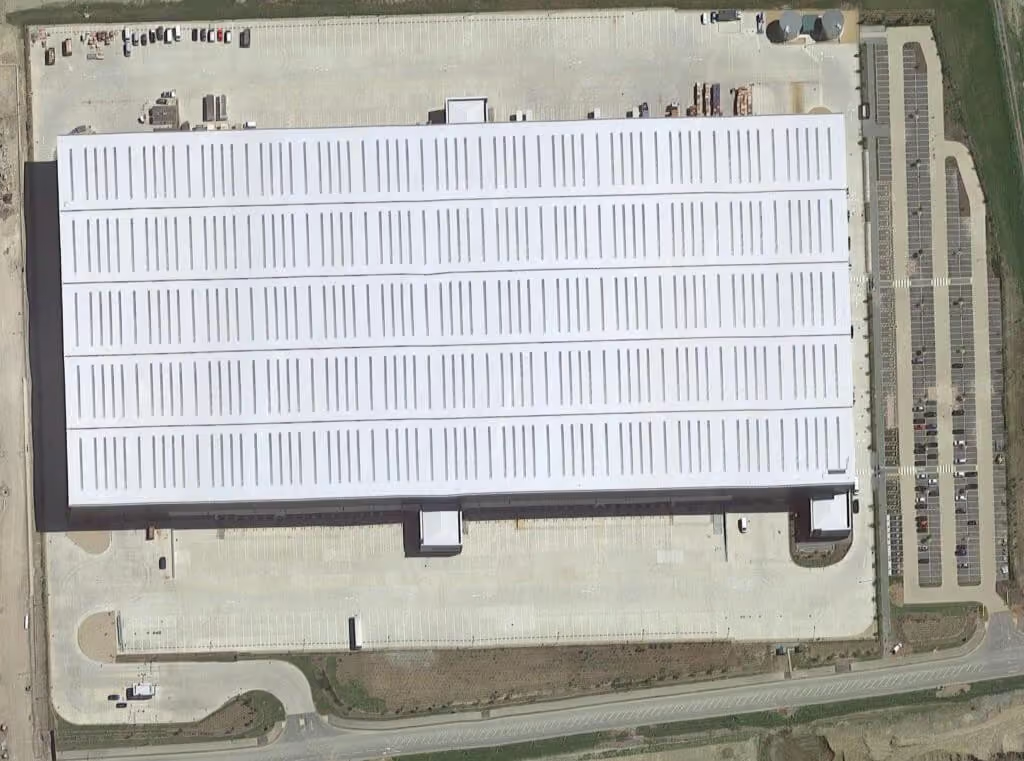
- Opening a 500,000 sq ft distribution warehouse to a fixed deadline. We designed and delivered a resilient Cisco LAN and WLAN across warehouse and office areas while the layout changed and several trades worked in parallel. Read the project.
- Connecting a new warehouse chamber. We extended switching, fibre and Wi‑Fi into a new operational area under a strict, phased programme, allowing stock to move in while work continued. Read the project.
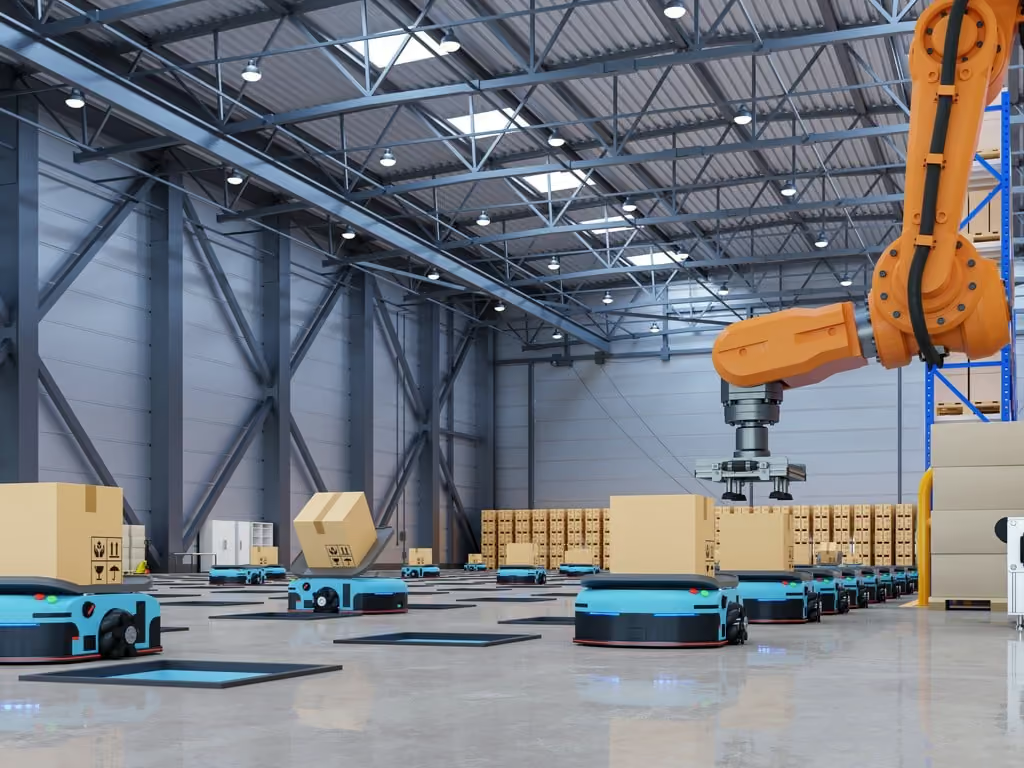
- Supporting around 80 automated picking robots. We designed a high-density wireless environment for moving devices that required continuous connectivity and very low latency within a distribution centre. Read the project.
Related guidance
- How to fix warehouse Wi‑Fi roaming and handoff issues
- How to scale secure enterprise networking across UK warehouses
- Overcoming Wi‑Fi challenges in warehouses and other industrial settings
- Why your network will decide whether AI delivers in your warehouse or factory
- Business Wi‑Fi networks
Frequently asked questions
What is a connected warehouse?
A connected warehouse uses secure wired and wireless networks to connect people, devices and operational systems across the site. It brings scanners, voice devices, WMS and ERP applications, automation, building systems and office services onto an infrastructure designed around availability, movement and security.
How do you make warehouse Wi‑Fi reliable?
Start with the environment and the devices rather than an access-point count. Model the racking and materials, measure coverage and interference on site, test real movement routes with the actual client devices, tune cell sizes and channels, then validate the finished design under representative conditions.
Why do warehouse scanners disconnect while moving?
Common causes include poor overlap, cells that are too large, co-channel interference, unsuitable antenna patterns and differences in scanner roaming behaviour. The fault can also sit beyond Wi‑Fi in authentication, switching, WAN or application performance. A route-based test helps identify where the session degrades.
How many access points does a warehouse need?
There is no reliable square-metre formula. The answer depends on racking geometry, stock materials, ceiling height, antenna patterns, device capabilities, capacity, interference and service requirements. A survey-led design is more dependable than copying an office density rule or simply adding access points.
Does a warehouse need a Wi‑Fi survey?
Usually, yes. A predictive survey helps shape the initial design, while an on-site survey tests the real environment. A post-installation validation survey then provides evidence that the network meets its coverage, capacity and roaming criteria. The sequence can be adapted for a new build where racking is not yet installed.
Can you improve an existing warehouse network without replacing it?
Often. Placement, antenna orientation, power levels, channel plans, roaming configuration, firmware and client behaviour can all affect reliability. We assess the existing estate first and recommend replacement only where the evidence supports it.
Do all warehouse areas need industrial-grade equipment?
No. Standard enterprise equipment may suit many zones when correctly positioned and protected. Industrial or IP-rated hardware should be selected where temperature, moisture, dust, impact or hazardous conditions genuinely require it.
Can the network support AGVs, AMRs and warehouse automation?
Yes, provided the design starts with the application requirements. Device speed, mounting position, latency tolerance, traffic patterns, fail-safe behaviour and operational routes all influence the wireless and wired architecture. The right answer may differ between general scanners and mission-critical automation.
How can warehouse devices and guest users be kept secure?
Use identity- and device-aware access, appropriate authentication and segmentation so operational systems, employees, contractors, automation and guests receive only the access they need. Security policy should be tested during commissioning and kept visible through monitoring and documentation.
Can a warehouse network be upgraded without stopping operations?
In many cases, yes. The work can be phased by area, shift or maintenance window, with temporary arrangements and rollback plans agreed in advance. The design and programme should account for safety, change control, other contractors and the operational cost of taking each zone offline.
Start with the operational requirement
If you are planning a new distribution centre, expanding a warehouse, introducing automation or trying to resolve intermittent connectivity, we can help turn the operational requirement into a clear network plan.
Email solutions@oxspring.com with the subject “Connected Warehouse”. Tell us about the site, the devices and systems involved, the areas where connectivity matters most, and what is changing. We will arrange an initial Teams call, with no cost or obligation, to understand the problem and determine the most useful next step.